
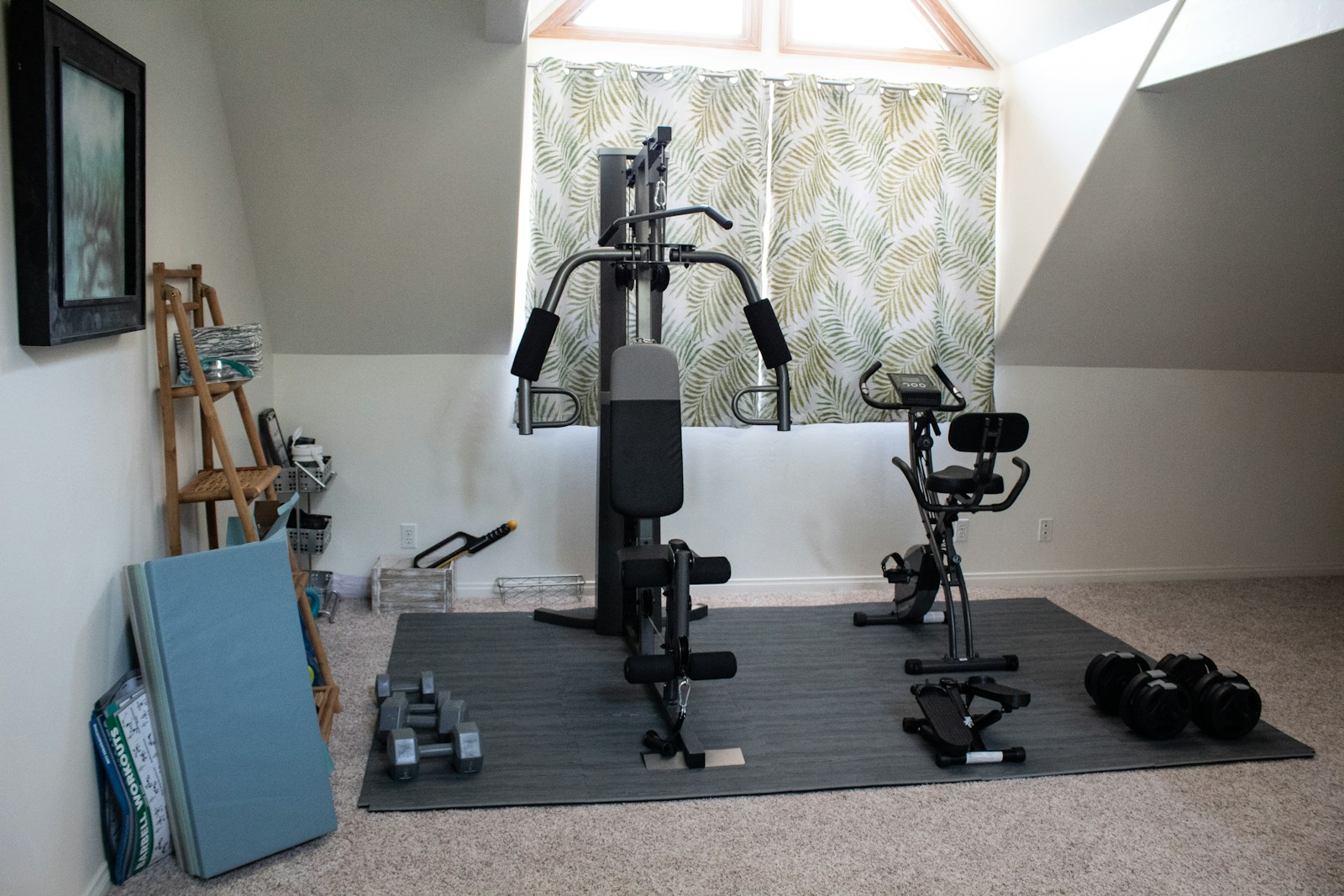
Something I have always thought about with people that have stayed in shape is that the ones who stuck with their fitness goals weren’t always the ones with the fanciest gym memberships. Alot of times they were the ones who invested in creating a dedicated workout space at home. It doesn’t need to be fancy or expensive you can start with spare bedrooms, basements or a space in your garage. While a home gym doesn’t have to be complicated or expensive, it does require some forethought and planning.
Having just gone through the process myself of working with a home addition designer, I’ll walk you through everything I’ve learned about designing an at-home gym addition, maximizing your space and selecting equipment that will actually get used.
First, Why a Home Gym Works
I get it. You’ve probably scrolled past Instagram photos of elaborate home gyms with thousands of dollars of equipment gathering dust. You don’t need that, you just need to get started. What I’ve seen work consistently is a focused space that removes barriers to exercise. No commute to the gym. No waiting for equipment. No comparison with others. Just you, your goals and the tools you need.
The science backs this up too. Studies show that proximity and convenience are among the strongest predictors of exercise adherence. When your gym is 10 steps away instead of 20 minutes away, you’re dramatically more likely to actually use it.
Planning Your Space: Before You Buy Equipment
Start with Your Reality
Before you dream about a squat rack and full cable machine setup, be honest with yourself about three things:
What space do you actually have? Measure it precisely. I’ve had clients overestimate their available square footage by 30-40%. A solid home gym can function in 200-400 square feet, but if you’re working with a corner of your bedroom, we need a different strategy than if you’re adding a 20×20 addition.
What’s your budget? Home gym costs can range from $500 to $50,000+. You don’t need the high end. I’ve trained clients who got phenomenal results with $2,000-$5,000 setups.
What are your actual fitness goals? Are you training for strength? Endurance? Flexibility? Weight loss? Your goals should drive your equipment choices, not the other way around.
Do More With Less
This is where most people go wrong. They buy equipment they love the idea of, not equipment that fits their space and goals. Here’s how I advise clients to think about space efficiency:
Vertical Is Your Friend
When you’re limited on floor space try to think vertical. Wall-mounted pull-up bars, resistance band storage systems and tall shelving for dumbbells can dramatically increase your functional training area without eating into your floor footprint.
Multi-Functional Equipment Beats Single-Purpose
I always recommend clients prioritize versatility:
- Adjustable dumbbells (vs. a full rack of fixed weights) you’ll save 80% of the space and let you do 90% of strength exercises
- Resistance bands and loop bands weigh almost nothing, cost $50-150, and provide variable resistance for nearly every movement pattern
- A sturdy adjustable bench enables dozens of upper body, lower body and core exercises
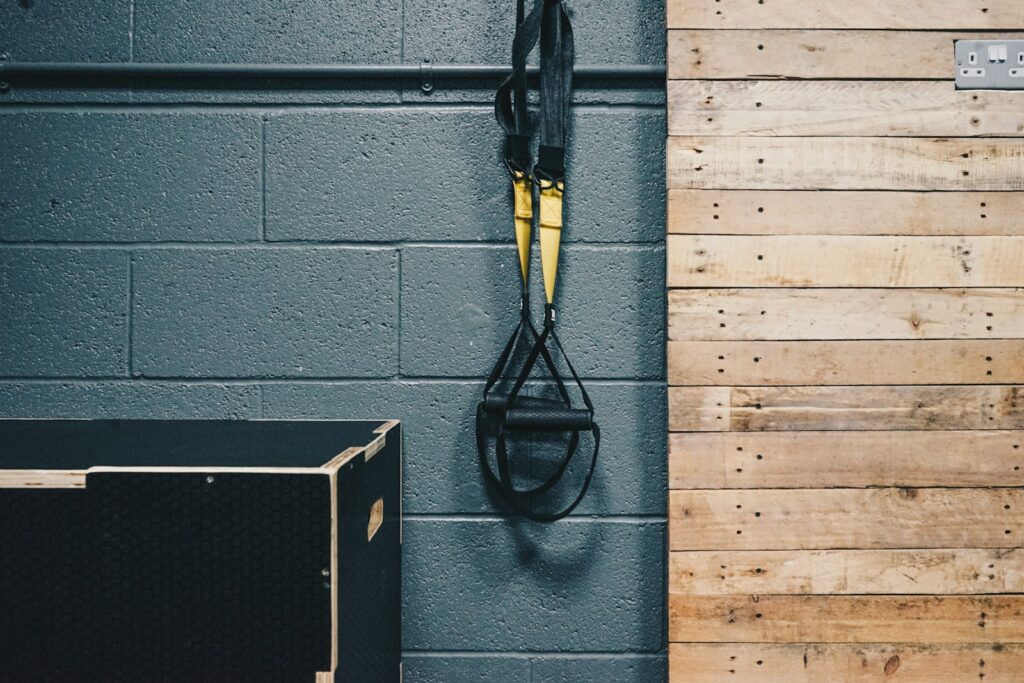
- Suspension trainers like TRX are incredibly compact, full-body capable
- An adjustable cable machine one piece covers what would normally require 3-4 machines
Equipment That Folds or Stores Easily
- Folding weight benches
- Adjustable dumbbells that stack vertically
- Resistance bands that roll into a bag
- Yoga mats that roll up
- Wall-mounted cable systems or racks
Three Home Gym Setups for Different Spaces and Goals
I typically recommend one of three setups, depending on your situation. Think of these as templates you can customize.
Setup 1: The Apartment Minimalist (200 sq ft or less)
Perfect for: Space-limited environments, renters, beginners
Core Equipment:
- Adjustable dumbbells (5-50 lbs)
- Adjustable bench (fold-away)
- Resistance band set
- Yoga mat
- Pull-up bar (doorway mounting)
- Ab roller
Why it works: This setup covers roughly 85% of effective strength and conditioning work. You can do strength training, metabolic conditioning, and mobility work. Estimated cost: $800-1,200.
Sample exercises: Dumbbell squats, bench press, rows, lunges, bicep curls, tricep extensions, farmer’s carries, planks, band work for mobility.
Setup 2: The Moderate Investment (400-600 sq ft)
Perfect for: Dedicated home gym rooms, finished basements, serious fitness enthusiasts
Core Equipment:
- Adjustable dumbbells (5-90 lbs)
- Barbell with weight plates and squat rack (or power rack)
- Adjustable bench
- Cable machine or functional trainer
- Resistance bands
- Pull-up bar
- Foam roller and recovery tools
- Rowing machine
- Kettlebells (2-3 sizes)
Why it works: This setup lets you train like you would at a commercial gym. You have options for heavy strength work, hypertrophy, and conditioning. Estimated cost: $4,000-7,000.
Sample exercises: All of Setup 1, plus barbell squats, deadlifts, bench press, overhead press, barbell rows, cable-based isolation work, kettlebell movements.
Setup 3: The Full-Featured Addition (600+ sq ft)
Perfect for: Dedicated gym room, garage conversion, serious athletes
Core Equipment:
- Full dumbbell rack (adjustable or fixed pairs)
- Power rack with pull-up attachment
- Barbell and weight plates
- Cable machine or dual-stack machine
- Treadmill or rowing machine or assault bike
- Adjustable benches (multiple)
- Kettlebells and medicine balls
- Foam rolling station
- Mirrors (entire wall)
- Dedicated recovery zone with stretching area
Why it works: This is essentially a mini commercial gym. You have the flexibility to program varied workouts and train different goals simultaneously. Estimated cost: $8,000-15,000+.
Recovery Equipment and Setup
Something that separates the trainers who see long-term client success from those who don’t: we prioritize recovery. Most people focus 100% of their home gym budget on exercise equipment and 0% on recovery. Don’t skip this.
Essential Recovery Tools
| Recovery Tool | Cost | Why It Matters | Space Required |
|---|---|---|---|
| Foam roller | $30-80 | Reduces soreness, improves mobility, accelerates recovery | Minimal (wall storage) |
| Massage gun | $100-300 | Increases blood flow, decreases muscle tension, portable | Very small |
| Yoga mat | $30-120 | Essential for stretching, mobility work, floor exercises | Roll up storage |
| Stretching straps | $15-30 | Improves flexibility, targets hard-to-reach areas | Minimal |
| Lacrosse balls/trigger point balls | $15-40 | Targeted myofascial release, extremely affordable | Minimal |
| Resistance bands (light) | $20-50 | Mobility work, warm-ups, activation | Minimal |
| Stretching mat or yoga space | $50-200 | Dedicated area for flexibility work (even 4×4 feet works) | Depends on layout |
Creating a Recovery Zone
In my experience, dedicating even a small corner to recovery changes everything. This doesn’t need to be fancy. I recommend:
- A clear, clean 4×8 ft area (minimum) with a yoga mat
- Storage for your foam roller, massage gun, and stretching tools nearby
- A mirror to check your form during stretching
- Good lighting (poor lighting discourages use)
- Ideally, some inspirational elements (plants, art, calming colors)
The psychology matters here. If your recovery zone feels like an afterthought, you’ll treat it like one. Make it intentional.
Room Planning
Layout Tips
- Put heavy equipment (racks, cable machines) against walls to maximize open floor space
- Keep the center of the room clear for movements like deadlifts, farmer’s carries, and conditioning work
- Position mirrors strategically one wall opposite your lifting platform is ideal
- Ensure adequate ceiling height 9-10 feet is ideal if you plan to do overhead pressing or pull-ups
- Plan for ventilation a home gym gets hot. A ceiling fan or window is essential for comfort and motivation
Lighting
This might sound small, but good lighting significantly increases gym usage. Overhead LED panels that mimic daylight are ideal. Avoid dim, cave-like atmospheres.
Where to Source Equipment

Dumbbells and Basic Equipment
- Bowflex SelectTech Adjustable dumbbells, industry standard, reliable
- Yes4All Budget-friendly alternative, solid quality
- Powerblocks Excellent build quality, slightly more expensive
Benches
- Fitness Reality Best value for adjustable benches
- Rep Fitness Higher quality, steeper price
- Rogue Premium option, built to last
Racks and Barbells
- Rogue Fitness Industry leader, pricey but worth it for serious lifters
- Rep Fitness Great quality, slightly more affordable
- Titan Fitness Budget option with decent quality
Recovery Tools
- Theragun (massage guns) Premium, excellent quality
- Hyperice High-end recovery tools
- Amazon Basics/generic brands Surprisingly effective foam rollers and stretching supplies
Common Mistakes I See
1. Buying equipment you don’t need
Solution: Start minimal. Add equipment only after you’ve used everything you have.
2. Neglecting the space itself
Solution: Invest in proper flooring, lighting, and storage. A well-designed space is more motivating.
3. Skipping recovery completely
Solution: Dedicate at least $200-300 of your budget to recovery tools.
4. Isolation exercises over compound movements
Solution: Prioritize squats, deadlifts, presses and rows. These build the most muscle and strength.
5. Inconsistent programming
Solution: Follow a structured plan, even if it’s simple. Random workouts = random results.
6. Poor ventilation
Solution: Install a fan. Seriously. Heat kills motivation.
7. Treating it like a storage room
Solution: Your home gym is for fitness. Don’t use it to store holiday decorations or exercise bikes you don’t use.